
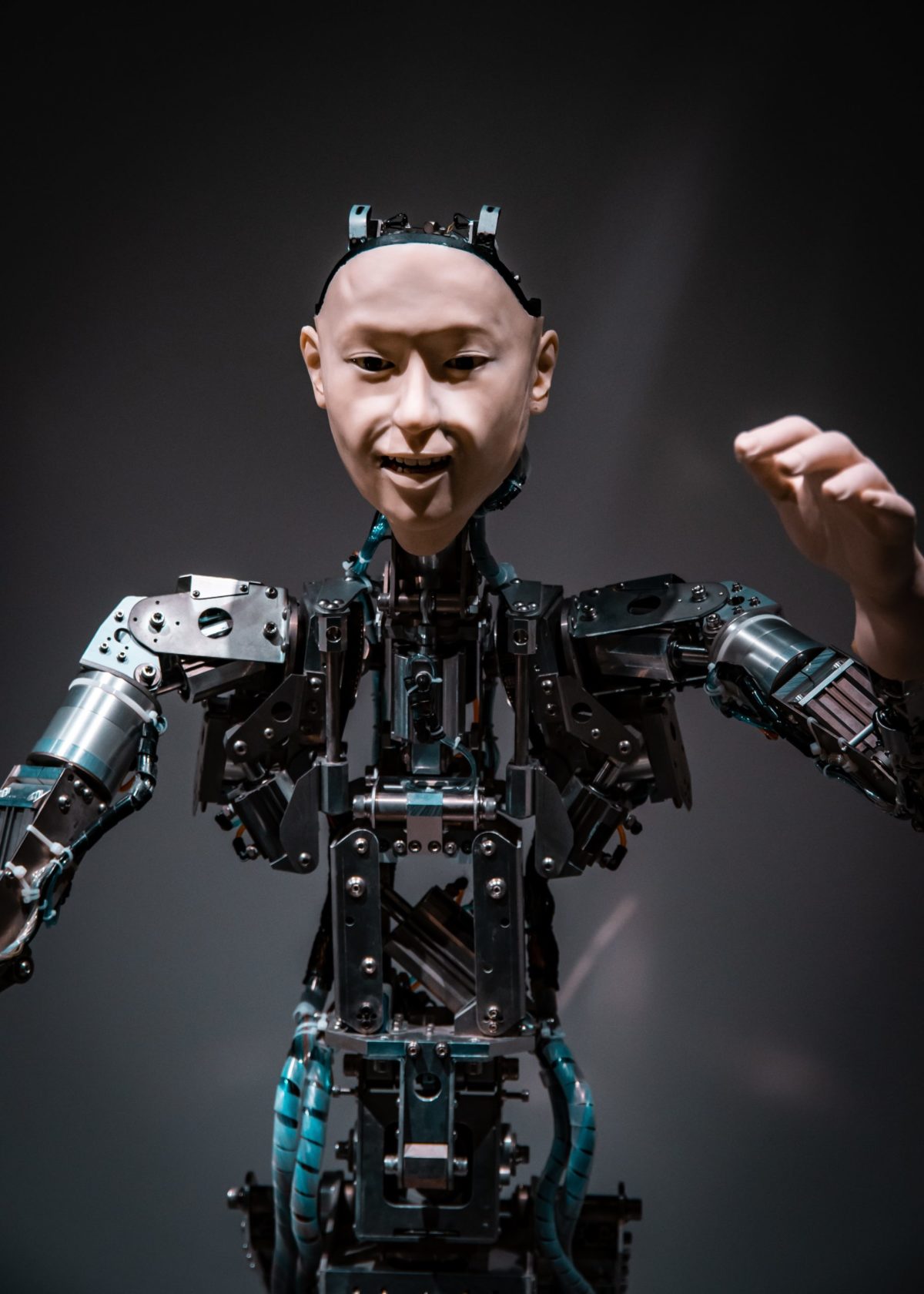
Innovation in AI is moving fast, incredibly fast, but will it be to the benefit of consumers or the long- term marginalisation of the human race?
Stephen Hawking famously said, ‘Once Humans develop AI, it will redesign itself at an ever-increasing rate, humans cannot compete and will be super-ceded!’ Elon Musk equally expressed concern when in 2016 he said of Google working on Deep Mind AI technology, “The nature of the AI that they’re building is one that crushes all humans at all games,” he said. “It’s basically the plot line in ”War Games.” Human beings could become the equivalent of ‘house cats’ to new AI overlords. He has since repeatedly called for regulation and caution when it comes to new AI technology.
Positive, early stage innovation in AI is seeing break throughs in medical diagnosis particularly in more accurate diagnosis of early stage disease and the pinpoint targeting of treatment which significantly reduces collateral damage to non-infected surrounding organs. Equally AI is making huge inroads into agriculture where driverless tractors, accurate mapping of fields to maximise efficient planting and harvesting are all improving efficiency.
However, there is a potential dark side too, in which are warning signs to all marketers and innovators. In China face recognition has been adapted to recognise shoppers in supermarkets, link to their ID in order to track their purchases and bombard them with targeted messaging on social media which has caused uncharacteristically strong consumer pushback. Is this just a latter-day version of Tesco’s Clubcard or potentially something much more invasive? Equally AI face recognition technology is being used to link to individuals financial records in order understand the net wealth of potential customers coming into estate agents or new housing developments. This is in order for the salespeople to be able to focus on the most likely purchasers of properties. Very clever, but the long-term ability to access such personal, sensitive information could have sinister offshoots.
As a result, different regulators are acting in very different ways. The EU is imposing strict rules over data usage, GDPR, which is widely seen in AI circles as stifling innovation in the sector. But then Europe has no major players in AI, there may be link?! The US relies on a more local light touch state regulation, as a result the US is at the forefront of AI development. However, China is leading the field with the state being a major user and innovator within the sector. Needless to say, there is a proliferation of world leading companies using and developing advanced AI systems coming out of China.
AI and machine learning is a real 21st century ‘industrial revolution’ moment in our history, only constrained by our vison and the limits of our ability and confidence to delegate functions previously carried out by humans. State regulation, as seen in the EU, will only mean innovation is stifled, and AI developers moving elsewhere.
At The Innovation People, we deep dive into areas that will affect consumer and commercial practice in the future, understand the trajectory of early adopters & lead markets and apply it to our projects. We utilise the latest insight and trend tracking technology to facilitate design and Innovation sprints which help to ideate and test in days and weeks, where once months of analysis and resource would be required. Talk to us about your plans for growth and how to adopt an innovation mindset within your organisation. Find out more: http://www.tipinnovate.com or contact@tipinnovate.com